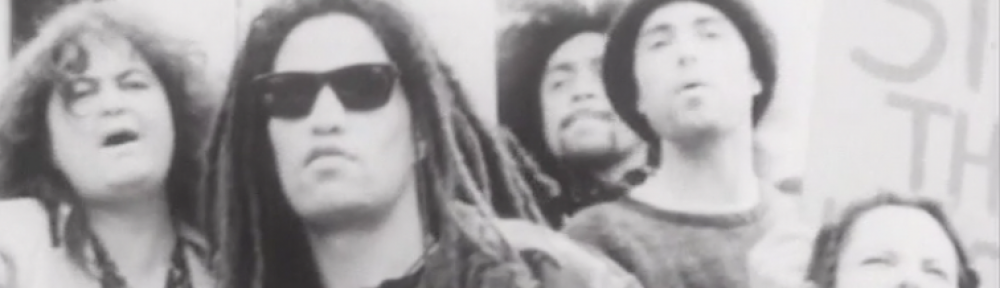


POI E – the story of our song; the movie, brought to life the often tempestuous yet remarkable musical partnership of Dalvanius Prime and Ngoi Pewhairangi and their journey to the making of the 1984 hit pop song in New Zealand, POI E.
Their achievement in topping the NZ pop charts for four weeks with their Māori language only pop song in 1984 is yet to be duplicated or surpassed. Ngoi’s untimely death in 1986, sadly, ended their collaboration.
Spoiler alert – this is a Fun-tastic film for the whole family and if you want to see the movie, book now at Ticketek NZ and stop reading!
An impudent, funny, irreverent and a much used word but aptly so in this case, fabulous film that captures the spirit of two very different maestro. Both with a passion for Māori language that transcended their differing tribal mita, maungā, awa and even gender.
POI E is an uplifting tale of what small town New Zealand, on the West and the East coast did in 1980’s after the main employers in their regions closed down.
Dalvanius, like the star performer that he was, sets the tone and the pace of the film thanks to Kahi’s clever use of Dalvanius’s archival film and radio interviews.
Dal’s often painfully honest analysis of his own shortcomings, the obstacles he faced, is tempered by a superb supporting cast and chorus of those that loved, feared his sharp wit, adored and vilified him the most – his extended family, the tribe. Also on hand to keep the frame in focus is Connie Pewhairangi (Ngāti ) daughter of Ngoi with her granddaughter.
There are minor roles for NZ music’s elite, the angelic divas Director/Producers Moana Maniapoto, Hinewehi Mohi along with Annie Crummer the evergreen Don McGlashan with Stan Walker, kicking the breeze with Director/Writer/Actor Taika Waititi but they are nothing in comparison to the lens of the whanau.
All however, serve to remind us that it is about the music.
And what glorious music this is, from Ngois’ award winning number one hit song ‘E Ipo‘ sung by cabaret artist extrodinaire Prince Tui Teka and re-arranged by Dalvanius to the NZ dance anthem’Poi E‘ itself.
Director Tearepa Kahi like Dal, has dreamed big, taking on a four minute long historical New Zealand pop song and turning it into a feature length film, oi aue! As we would say in Taranaki mita or in more common parlance, ‘ yeah right.’
But this is good story telling. For those like our 12 and 9 year old nieces, who were in the whanau audience, they watched the film all the way thru with no wriggling, no excessive eating and best of all no falling asleep. It seems the magic of POI E to capture the interest of the young is alive and well in 2016.
For te reo or Māori language – POI E and the issues they faced in 1984 with the dwindling numbers of fluent Māori speakers, continue to plague us in 2016.
With a predominately young, urban Māori populace with little access to 24/7 fluent Māori speaking communities, in the cities where most of us now live, Maori language fluency is accessed by conscious, hard graft and determination.
In 2016, we’ve all gone back to the language revitalisation drawing board with a focus on ‘inter-generational transmission of language’ a flash way of saying if children are raised in Māori at home – our reo will survive.
Having a home is an equally important part of the Māori language revival equation. A turangawaewae, a place to stand and call your own, a home.
It was hard last night to remember that as we celebrated the success of the film POI E we were right there in Tamaki makau rau, the largest Māori city in the world,facing arguably the highest Māori homeless population that we have ever seen.
Maintaining Māori language communities when your home is a car, garage, park and you are trying to get food for children is a seemingly distant utopia.
For all those New Zealand cinephiles out there – is this the first time a Māori key creative team with a Māori story film have opened the oldest film festival in the land?
Dal was forever pitching John O’Shea (founder of NZ International Film Festival and producer) his feature film ideas especially Mokomokai – and John would always refuse.
Last night, witnessing the standing ovation for POI E the movie as the opening night film at the NZ International Film Festival I thought how happy and thrilled they both would have been!
Tearepa Kahi has skilfully crafted a movie of te reo, music and life in rural NZ that is destined to become a NZ cult classic. But you don’t have to think too hard, as it’s playful, entertaining and just like the music – all you have to do is dance!
Poi taku poi e!
Pictured Top clockwise L-R Ngoi Pewhairangi, Dalvanius Prime (1984) Poi E the movie opening night NZ International Film Festival, Maryanne Broughton (Original Patea Māori Club member) Janine Maruera (Manager, Patea Māori Club) opening night of POI E with photos of Ngoi and Dalvanius on the red carpet. Stills: Te Papatongarewa & Fala Media.
Poi E – the movie of our song.The opening night film of the 48th New Zealand International Film Festival, Civic Theatre, Auckland 15 July 2016. SOLD OUT.
Writer/Director/Co-editor/Executive Producer: Tearepa Kahi
Producers: Alexander Behse, Reikura Kahi
Line Producer: Callie Adams
1st Assistant Director: Neil James
Directors of Photography: Fred Renata, Jos Wheeler
Featuring: Dalvanius Prime, Ngoi Pewhairangi, Maryanne Broughton, Connie Pewhairangi, Barletta Prime, Bub Prime, Patea Māori Club members past and present, Pewhairangi whanau, Stan Walker, Taika Waititi. Re-enactments: Maaka Pohatu as Dalvanius